Business Insights from Andrea Hill

reflections

A Beautiful World

  • Short Summary: This is one of my favorite paintings. I go to it often for a burst of energy optimism and peace. I hope it does the same for you!

This is one of my favorite paintings. I go to it often for a burst of energy, optimism, and peace. I hope it does the same for you! Love & Light!  Andrea

A Cup of Coffee

  • Short Summary: A reflection on empty nesting and having time to think.

I didn't have a period of adulthood without children. They arrived together in a joyful rush of sleep deprivation and responsibility. So my daydreams of luxury weren't about cruises or cars or jewelry, but rather, about having an hour each morning to drink my coffee, stare out the window, and meditate. Now that it's a reality, I'm finding it's every bit the luxury I dreamed it was.

A Giving Thing

  • Short Summary: Loving - and being loved - are the most collaborative things we can ever do. The thing I want to know on my death bed with utter certainty is that I collaborated my heart out.

Loving - and being loved - are the most collaborative things we can ever do. The thing I want to know on my death bed, with utter certainty, is that I collaborated my heart out.

A Piece of the Success Puzzle

  • Short Summary: Most obstacles to success - personal or organizational - come from inside not outside.

Success is not a mystery, it's a puzzle. One piece: Most obstacles to success - personal or organizational - come from inside, not outside.

A Woman

  • Short Summary: Haiku about a woman.

Ask me what I am

My answer depends on the time of day

Surely I cannot be all these things at once

Be My Valentine? No, Be Something More Enduring

  • Short Summary: The bar for true romance should be much higher than any great Valentine's Day experience can provide.

Last week we were out to dinner with my daughter, grand-daughter, and my daughter's boyfriend. We were making family plans for the following weekend, and at the mention that the following Friday was Valentine's day, my daughter rolled her eyes and her boyfriend instantly stiffened up.

"What's up with Valentine's day?" I asked.  

My daughter started laughing and said, "Justin doesn't know what to do with the fact that I don't believe in Valentine's day." Justin nodded uncomfortably in response. I smiled at him and asked, "You feel set up, don't you?"

Valentine's Day is perhaps the biggest set-up of all the made-up holidays. As a society, we worship romance, but we worship it in the same way we worship female beauty by buying the Sports Illustrated Swimsuit edition. The romance we are told to aspire to is the romance experienced by Jennifer Aniston and Brad Pitt on the large screen - the romance of impossibly beautiful people with no financial difficulties and professional writers telling them what to say. No wonder marriages have such a hard time staying the course. Our realities are filled with long days at work (or two jobs), difficult discussions over which bills to pay, stress over our childrens' experiences at school, and feeling too tired, or bloated, or uninspired to make love at the end of the day.

The actual definition of romance has to do with the quality and mystery associated with love - with the excitement that comes from being removed from every-day life. That's almost impossible to recreate with a bouquet of flowers and some sexy underwear.

This isn't to say that there is no real romance in the world. It just looks a bit different than what we're told it is. True romance involves saying thank you, for everything.  Saying I Love You every time you leave, every time you return, and as many times as you can in-between. Remembering to pick up your loved one's favorite cheese at the grocery store. Taking his car and filling it up with gas to surprise him.  Rubbing her feet with no ulterior motive. Having a really good laugh together. Setting aside time every day to spend together - even if it's just watching TV.

The sum of all these small acts serves to create a protective, private bubble within which a couple lives - a bubble that doesn't even include the children. This exclusive place is the place you go to together, the place that is outside of every-day life. The mystery is found in the fact that someone else actually knows you as well as someone else can possibly know you. The excitement is found in knowing that these little acts of love are yours to give and receive as many times as you think of them, every day of your lives. 

So it's no surprise that Valentine's Day is a big disappointment for so many. It's impossible to create in one day that which needs to be cultivated every day in order to happen at all. True romance isn't a moment, it's a path traveled.

We explained our take on Valentine's Day to Justin, and I think he's feeling better about it. At least he knows he's not being set up. But now he knows the bar is actually much higher for true romance.

Birthday Night

  • Short Summary: A memory of a magical birthday night for a 10-year-old exploring the ballrooms in Chicago's Palmer House.

When my granddaughter, Aubrey, was asked what she wanted to do for her birthday, she said she wanted to stay in a "beautiful hotel" in Chicago for the weekend with me and a girlfriend. School is still out for the holidays, so we decided to go this weekend before New Years Eve. We did the usual Chicago things - the Museum of Science and Industry, Yolk for Breakfast, and Giordano's for dinner. But the most magical part of Aubrey's birthday adventure was exploring every ballroom in the Palmer House, late last night, the girls in PJs, while crews set up for the next day's new years eve parties. Hushed but busy, party favors arranged on tables, almost-10-year-old girls dancing to their own music on every ballroom dance floor. I hope that memory accompanies them to every glamorous party they attend for the rest of their lives.

Crazy-Ass Gods Get All the Press

  • Short Summary: Apparently we need to start saying crazy things like "God doesn't want children to go hungry and without health care!!", "God doesn't want us to cut education and give that money to billion dollar oil companies who will be profitable either way!!" "God gets to decide who is worthy enough to go to heaven!"

Those people with the wild-ass crazy god - the god who only loves some of the people, who thinks it's OK to be violent in his name, who is fine with lying, distortion, and being cruel to others in word and deed, and who said somewhere "Oh, go ahead! Judge away! I'm happy for you to do my work for me!" — those people are getting a lot of press. But I know there are people who believe in much different gods and prophets - who believe in love thy neighbor, karma, let he who has not sinned throw the first stone, a worldly obligation to take care of those who have less than us, right speech (the idea that by speaking kind and helpful words we create trust and respect), the virtue of honesty, and mercy. Apparently we need to start saying crazy things like "God doesn't want children to go hungry and without health care!!", "God doesn't want us to cut education and give that money to billion dollar oil companies who will be profitable either way!!" "God gets to decide who is worthy enough to go to heaven!" - would that get press? Would that get people all hot and bothered and talking? Oh, you're right, probably not. Because only the really crazy stuff seems to get peoples' dander up. And these claims just aren't crazy at all.

Death Expands Life

  • Long Summary: A reflection on Easter, Passover, and springtime traditions from around the world, exploring how death, transformation, and letting go can lead to deeper, more meaningful life. A meditation on becoming, renewal, and hope in uncertain times.
  • Short Summary: A reflection on Easter, Passover, and spring traditions — how death, change, and renewal invite us to live more fully and love more deeply.

Resurrection Begins with Surrender

Carl Jung once wrote that life only becomes whole when we accept death as part of it. At first, that can sound dark and cold, but the truth underneath is deeply human and quietly liberating.

If we lived forever, we might never fully live.

We might postpone, avoid, numb, and never commit. We might skim the surface, always assuming we’d explore the depths another day.

We may do those things now, only transforming internally when we look death full in the face and say:

Yes, I see you. I know you’ll come for me. I better make this life matter. I better love more freely. Say what needs to be said. Be truthful. Be faithful. Forgive. Forgive again. Make art. Make peace. Take risks. Leave something better behind.

Easter, Passover, Nowruz, Holi, Vesak … they invite us to reflect on that truth. The story of resurrection, of rebirth, of new beginnings, isn’t just about what happens after death. It’s about the power of transformation because death exists.

Death doesn’t shrink life — it expands it. It gives life shape and urgency, pushes us to let go of fear, ego, and uncertainty … all to let something new grow.

Whether you find hope in the empty tomb, in the cycles of nature, or in the sacredness of every fleeting moment — this season reminds us

We are not meant to last forever.
We are meant to be transformed by the journey.

Garbage Night

  • Short Summary: Sometimes you have to get creative when dealing with the elements.

Picture if you will: 50 mph winds, sheets of freezing rain, 400 feet of treacherous driveway all downhill. Garbage night with 2 full bins. One adult already damaged from last week's fall on the ice . . . Enter Marlaine and Aubrey in the trunk of my car, wearing snowsuits, Aubrey in a bike helmet, on her knees, holding the trunk open, Marlaine on her keester, riding backwards, dragging the bins behind us. We are nothing if not resourceful. Aubrey can't wait for next Monday.

Get Out of Your Way

  • Short Summary: How do you know if you're in your own way? The biggest red flag is if you're not improving.

How do you know if you’re in your own way? The biggest red flag is if you’re not improving. Being stuck is not the way of nature. Nature always progresses. If you can’t get something done, if you’re feeling in a rut, if your business is stagnant, if your employees aren’t growing, if you aren’t growing, you’re in your own way.

GPS for your Future

  • Short Summary: A roadmap is essential when driving to new places. A strategy map is essential when driving into the future. Keep your eye on your road.

A roadmap is essential when driving to new places. A strategy map is essential when driving into the future. Keep your eye on your road.

Happy Fool's Year

  • Short Summary: I'm not a big one for New Year's resolutions but I do find myself at the beginning of each new year thinking about my major life themes such as how about 15 years ago I decided to stop taking myself so seriously and try being a Fool instead.

I’m not a big one for New Year’s resolutions, but I do find myself at the beginning of each new year, thinking about my major life themes; such as how about 15 years ago I decided to stop taking myself so seriously and try being a Fool instead.

Why a Fool? Because The Fool questions the norms, and is not tempted by the comfort that comes of conforming. Questioning the norms peels away the cataracts that can cloud one’s view of life. Clarity is such a high.

The Fool gives herself permission to do scary things. Like be authentic. This is a circular gift; you have to risk authenticity to be a Fool, but being a Fool makes you more authentic. Of course, the risk is not as great as it may seem. Authenticity is ultimately liberating, because it’s a huge time-and-anxiety saver.

To the extent that ‘what is true’ and ‘what is desired’ are not the same, The Fool gives herself license to seek only what is true. Truth-seeking can be messy and baffling, and is often confused with trouble-making. Causing trouble is not the Fool’s objective, but she doesn’t shy away from it either.

A Fool knows that each new day is a leap into the unknown, and that all the work we do to wrap ourselves in conventionality merely masks this fact. So every day she practices jumping joyfully into the abyss, slowly but surely perfecting the art of living a life without fear.

A Fool maintains her optimism, not because she doesn’t see the negatives, but because living a life focused on them is no life at all.

The Fool traipses among life’s complexities looking for themes and common threads rather than easy answers. It’s why she always looks like she’s dancing, bobbing, and weaving, and she likes the way it makes the bells on her cap jingle.

It takes a lot of time to become a true Fool. Perhaps more time than I’ve got. But I’m finally getting the steps and the rhythm down, and believe I may be on my way.

Holiday Wishes

  • Short Summary: My holiday wish for every one of us is that we each choose to fill our own experience with those attributes so that together we can create a shared world that's worthy of living in.

There is no doubt in my mind that we create the world we live in. It's not always easy to choose love over hatred, trust over cynicism, forgiveness over grudges, acceptance over judgement, selflessness over selfishness.

Oh, but wait a minute . . . it is! It IS easy to choose love, trust, forgiveness, acceptance, and selflessness! We can choose these things as easily as we choose what to wear in the morning or what to eat for breakfast! And since it's the only way to be happy, my holiday wish for every one of us is that we each choose to fill our own experience with those attributes, so that together we can create a shared world that's worthy of living in.

Happy Season of Love!

Andrea

How We Evolve

  • Short Summary: I suspect that the key to lifelong vitality may be the ability to change my own mind.
I woke up this morning thinking about how often I choose comfort over courage. This juxtaposition can be applied to everything, from decisions about where or how we live, to what we believe in and vote for, to what we are willing to lend our voices and reputations to, to our identities and what we believe we are good (or not good) at.
It occurs to me that if I want to be vital into my old age, I need to choose courage over comfort. I need to remain open to unlearning old ideas so I can learn new things, to challenging my own assumptions, and to embracing concepts that were previously unknown or unappealing to me. I suspect that the key to lifelong vitality may be the ability to change my own mind.

Leave a Little Space

  • Short Summary: If your brain is all filled up with knowing the answers you won't have any capacity for asking the questions.

If your brain is all filled up with knowing the answers, you won't have any capacity for asking the questions.

Life is What You Make it

  • Short Summary: Life is What You Make it

My mom and I are planning an escape. If they don't do surgery today, we are going to tuck her into a wheelchair and sneak off to the lakefront. What the hell. After weeks here it's time to get outside, have a laugh, and reclaim some control. If you see two wildly cackling women running full-tilt with a wheelchair in front of Northwestern hospital security on Chicago news tonight, it's not a Halloween stunt . . . it's just us.

Mastery Can't be Faked

  • Short Summary: Mastery can't be faked. True masters inspire those around them.

True subject matter expertise -- mastery -- can't be faked. The depth of a master's skill, knowledge, and ability to synthesize new information is best observed through how much more inspired, informed, and aware you feel when you are in communication them.

More Empathy. Less Entitlement.

  • Short Summary: When we define ourselves too narrowly we fail to see all the ways we can connect with other humans and in that failure lies all the previous failures of humanity.

One theme that presents itself over and over again in human history is that during times of great stress – famine, war, natural disasters – the capacity for empathy in general suffers as people attend to their own survival. That’s why stories about people rising above catastrophes make us feel so good – because we realize that it’s special, and admirable, to rise above one’s own pain to care for others.

So when we have tremendous failures of empathy, I tend to look for the tragedy driving it. And right now, I don’t see it.

The excuse that the far right is using, not just in America but also throughout Europe, is that immigrants are taking away our jobs, our tax dollars, even our identities. Apparently, immigrants have been elevated to the level of natural disaster or famine. But as I write this, I’m working in Europe, and when I’m not in Europe, I’m in the American heartland, and I know for a fact that this is not true.

We are well off. We are well fed. For the most part, we have jobs. Has the wealth gap grown in the past 30 years? Most definitely. Are the kinds of jobs that afforded a high-middle-class lifestyle disappearing? Yes. But the fact that we aren’t as well off as we want to be is not the same thing as suffering. All I can see is that we have lost perspective. We became nations of entitled people, and in the process, we are losing our humanity. In the meantime, people who are suffering from real wars, real poverty, real disasters are being turned away at our borders because . . . we are tending to our own war wounds, such as they are (not). This sense of entitlement is taking precedence over our ability to care about the basic (very basic) needs and human rights of others.

Second, our definitions of ourselves have apparently become small. Very, very, very small. Why do I say that? Because we can’t seem to muster any energy to care about the problems of others, which obviously means we cannot relate to anyone.

For example, I am working right now with several women with young children. They are trying so hard to take advantage of the time I am here to work with them in Italy, but they also have all the demands of getting home, caring for children, cooking dinner, maintaining a home. They are young professional mothers. I remember so well being a young professional mother. It’s exhausting! We are the same.

While sitting in the airport in Istanbul, I had a lovely conversation with a woman who was traveling with her three children to meet her husband, who had moved to Canada ahead of them for work. She was so stressed about the move, wondering how it would be for her children, would they be accepted, would they lose sight of their own culture. I’m not a Muslim woman, and I don’t have to learn a new language, but I totally understand being a mother and a wife. She was also very stressed about leaving her parents behind. There, too, we could connect, because we are both daughters.

I spend much of my time working with CEOs and entrepreneurs. These are more often men than women, typically self-made. I’m not a man, and I often roll my eyes at the Boys’ Club of International Business. But, I can relate to being a CEO, and all the stress and isolation that comes with that. In that way, we are the same, and we can work from that place of empathy.

There is not a person in the world with whom you cannot connect on some level. We are all someone’s wife, husband, daughter, brother, mother, aunt, teacher. We have all experienced loss, joy, and the pride of some accomplishment. We have all, at one time, wanted something more, different, or better.

I do not know how any mother looks at the videos of children being removed from the parents at the US/Mexican border without feeling her insides contract with the pain of empathy. Having my child forcibly removed from me would kill me. I do not know how any white man looks at a black man without recognizing that he would die of shame if he were treated with the emasculating lack of respect that black men expect every single day. When white women and black women fall out over the goals of feminist activism, white women need to stop and remember that women – of all races – still hold disproportionate responsibility for holding the social fabric of their communities together, and that what a black woman must do to hold a black community together is generally much harder than what a white woman must do in her own. Because . . . women.

I do not believe it is possible to justify violence through empathy, but of course, I’m non-violent, so I can’t relate. There are people whom I respect who believe there is a place for violence in the pursuit of change. So I try to understand them through some other filter, even if it’s to simply stay in communication while remaining in deep disagreement over tactics. I know people who are conspiracy theorists. I don’t believe that airplanes are spewing chemicals to turn us all into sheep, but I’ve often gone to the Tarot cards as a way to ease my mind over the unknown. Are these things so different? 

Perhaps our biggest failures are when we define ourselves too narrowly, or too generically. By thinking we are only one thing (a nationality, or a skin color), we lose sight of all the things we are and can be. When we define ourselves too narrowly, we fail to see all the ways we can connect with other humans, and in that failure lies all the previous failures of humanity.

Then, when we pile on a sense of entitlement, we make it worse. By thinking we are owed any particular outcome (middle class, or boss, or boat owner), we lose sight of the fact that the universe doesn’t owe any of us anything, that a mere happy accident of birth landed us in a country in which we can pretty much assume we won’t starve to death or have our entire town burned down.

More empathy. Less entitlement. Surely, we can do better than this.

Natural Christmas Tree

  • Short Summary: Natural Christmas Tree

The leaves have fallen from our Burning Bush, but the bright red berries remain. In its branches are four deep gray Dark-Eyed Juncos with their flashy white-tipped wings, two scarlet-capped Common Redpolls, and a comical Downy Woodpecker trolling up, then down, its branches. The Blue Jay is wandering on the snowy ground just beyond, probably casing the joint but looking benign for the moment. I could never hope to decorate a tree to be as lovely — or entertaining — as this.

Navigating the Coronavirus: Working from Home and Planning Your Future

  • Short Summary: Andrea Hill gives specific guidance and tips about working from home and reflects on one way to make this experience as positive as possible.

[00:00:00.060]
Right now, the first is that you need working hours. Now, a lot of people think when they start working virtually, that they're not going to work enough. But what I've found is that most people actually work too much. There's this compulsion to stay at your desk or your bench or your computer and put in as much time as you can because working from home doesn't quite feel like working. So it's almost like people feel like it's not quite as legitimate and it's not healthy to work all of the time.

[00:00:29.880]
So set some working hours and convey that schedule to your family and your friends and stick to that schedule. That's the first thing. The second thing is that you need a space for work. And it's not just about a place to put your computer or put your tools or whatever it is you're doing for your work. It's also about making the mental transition to work. You need to gear up to work, and the faster you can make that mental transition to work, the more productive your day will be.

[00:01:01.230]
If you have a big place and you can set aside space to work, that's great, then dedicate that space. But I know a lot of you are working with smaller houses, more people in the house and small apartments where you don't even have an extra room to work in. That does make it harder to dedicate space to work, but it is not impossible. I travel a lot for work.

[00:01:25.350]
Just last year I think I was on the road 110 days and so I'm working in hotel rooms a lot. And what I realized early on is that in hotel rooms I wasn't being very effective. So I would sit down to work, but I wouldn't be focused, I wouldn't be as clear. And I discovered it was because I couldn't make that mental transition to working in my hotel rooms.

[00:01:49.310]
What I figured out to do was that I would always set up every hotel desk, no matter what kind of hotel it was, no matter how different the desk was, I started setting up my hotel room workspace exactly the same way, so that as soon as I got to a hotel and I set up my workspace, it was familiar and it involved including a couple of familiar things and it involved the way I arranged that workspace. But once I got good at that, I could sit down in a hotel room and I could immediately get to work.

[00:02:20.910]
You can do that with a small home space as well. You can set up your kitchen table exactly the same way to work every single morning, then break it down at the end of your working schedule and return it to its other purposes. But create a space to work because you need it to help you make that mental transition to work. The other thing is that you need to do meaningful work. And I know that sounds like a silly thing to say, but it's really important, perhaps even more so right now, where we're trying to figure out what our meaningful work is.

[00:02:53.810]
So if you sit down in your space during your work hours and you don't carve out meaningful work for yourself, work that you can set goals for work that moves you forward in both your personal and professional and business goals, then you'll feel like you're sitting in your workspace just wasting time and spinning your wheels.

[00:03:17.060]
And that is a terrible feeling. Don't do that to yourself. So pick meaningful work to do. If you can't figure out what your business looks like 12 weeks from now, make that the work, make part of your work being developed to devising multiple scenarios for how you think the world might be and then what you can do within each of those scenarios to earn your living or set aside that time for learning. Learning time is worthy time. So study something you've always meant to study, study skills that you know you need for your business that you haven't had time to invest in.

[00:03:55.880]
Make that your meaningful work. If you don't have meaningful work to do, don't sit in your workspace. Go do something else because you'll feel much better about that time later. The next thing that I have to share with you is no jammies. It might seem like a great time to start working in the most comfortable clothes you own, but that doesn't necessarily put you in the best mental space for working. We don't wear shoes in our house. We've never worn shoes in our house.

[00:04:24.890]
And I realized shortly after I started working from a home based office that I was going to work in slippers and it didn't feel right. I actually felt like I was totally unprepared for work, for something as simple as shoes. So I bought a pair of shoes that I could wear just inside the house so that when I was at work, I felt dressed for work.

[00:04:44.720]
So I have a personal schedule that matches your schedule for going to an office or your store.

[00:04:51.650]
Get up in the morning, put on your makeup, get dressed, put on your shoes and get to work feeling like the version of yourself you want to be when you are being really productive. So those are my guides for how to get yourself in a routine of working from home. So now what about this thing that I took a few days off to ponder?

[00:05:17.330]
It seems to me that if we treat this time as an absence of a good life, if we treat this time as if we are pausing everything we love and know about life and simply waiting for life to get back to normal, then this time will be the most negative possible version of itself. I'm not saying it's easy to find peace and happiness in in a world where jobs are disappearing and money is frightening and we're worried about the health of ourselves or our family members or our communities.

[00:05:55.910]
So I'm not suggesting that it's going to be easy to find your happy place, but you can find a better place. And to me, I always feel more positive, more optimistic when I feel like I have some control over my situation. So the approach that I'm going to take is I'm going to figure out what this new version of my life can look like, not as an absence of all of the things that I normally love to do and can do, but rather within the current constraints.

[00:06:33.620]
What's the best version of life that I can have? And it could be very different than my normal life. There's no risk in approaching it this way. So I'm learning new things I'm applying myself at. Work a little differently, we we've set up new routines for family life that take into account that we're all, you know, stuck together in the house as opposed to being able to run out and do our thing and come back together in the evening.

[00:07:03.260]
We're determining what our new normal is and we're making it the best version of the new normal we can. If it turns out that eight or 12 or 16 weeks, the world goes back to exactly what it was before. We haven't lost a thing. We just made the best of the time we had. We found our new normal for this period of time. But there's a really good chance that we're going to find some things to do and think about and act on in this new phase that we can carry forward into the next phase of life, whatever that looks like.

[00:07:38.750]
So I'm working hard on not treating this time as a loss or a pause or simply a wait until I get my old life back. I'm going to approach this as what what could my life be the best version of my life be right now? What can I control? And hoping that I can learn some great things that I can carry forward into the future, whatever that looks like. So that was why I wasn't making videos for a day. I was sitting and plotting and planning and and thinking about the best version of my life and then discussing all of that with my family so we could make those plans together.

[00:08:18.530]
So that's all I have for you right now. I hope that you have a peaceful end of the weekend and beginning of the week, and I'll talk to you soon.

[00:08:28.650]
Bye.


Not Funding Musk

  • Short Summary: He doesn't need more.

... urgently cancelling my $2.99/month Twitter Blue account on the news of a possible sale closing with Elon Musk...

On Cool, Late Summer Days

  • Short Summary: If you wrap yourself in a shawl and pull on fuzzy warm socks and find a comfy place to sit outside far away from manmade things if you don't see any person or say anything for a very long time and the only sounds you hear are the sounds you usually miss then gradually you remember that crazy wonderful inexplicable things are possible and are probably happening right now.

If you wrap yourself in a shawl, and pull on fuzzy warm socks, and find a comfy place to sit outside far away from manmade things; if you don't see any person or say anything for a very long time, and the only sounds you hear are the sounds you usually miss, then gradually you remember that crazy, wonderful, inexplicable things are possible and are probably happening right now.

On Excess

  • Short Summary: Our landfills are full our houses are stuffed our pockets are empty and our country - one of the richest in the world - rates abysmally low on every 'happiness' index. It just doesn't have to be this way. Being happy with less is not the same as not-having. The true path to balance is to be utterly conscious about what matters to you and refusing to be preoccupied with the rest.

We were watching a television show the other day, and one of the characters purchased a $10,000 bottle of champagne. I wondered, "How many people in this world actually have the palate to appreciate the difference between a $10,000 bottle of champagne and a $1,000 bottle of champagne?" I do believe there are some folks who could genuinely taste the value and experience terrific joy from such an investment. And assuming that a $10,000 spend didn't create hardship for themselves or anyone else, more power to them. I certainly do not have that palate. I enjoy all products of the grape, but I know the limitations of my sensibilities. For me, my life would experience no greater benefit from the $10,000 bottle than it would from the $1,000 bottle. So defines the extent to which I am willing to spend money on champagne.

Of couse, willing has caveats, and they are not as simplistic as able. I realize it's probably the Iowan in me, but I look for a certain amount of moderation in my life. Moderation as defined by me, not a form of moderation masking laziness, developed to make a statement, or to appease a Nietzschean conscience. Over the years I have watched people strive for things they cannot afford or support, only to be made miserable by the consequences. I had the same reaction to that as I have to hangovers. Why would anyone intentionally inflict such pain on themselves?

The simple answer is that they are trying to make an impression. To be viewed by others as someone better than or more important than they really are. I suppose that simple answer applies to a lot of people. A more complex explanation is that a person lacks an internal sense of worth, and seeks to supplement her identity with acquisitions. I know many people to whom this description would apply as well. But I think the main reason people succumb to excess is that they are not conscious about what really matters. I don't mean in a common moralistic sense - I mean to them.  If we spend more on something - more energy, more money, more worry, more time - than it is genuinely worth to us, it is an excess. If we spend more on something than those around us would spend, but that investment gives us great joy, or helps us achieve something essential and benefits our lives in the process, then it is not an excess.

The bursting of the real estate bubble in 2007-2008 and the subsequent lean years shone a harsh light on our profligate spending. To be sure, consumer spending is down in the aftermath. As a branding expert, I often guide my clients to focus on the fact that consumers want more meaning and substance in their purchases. But sometimes I wonder, is that true? Have we started spending less because we are truly more conscious of our choices, or only because we have less money to spend?

My beautiful daughter - the one who turns heads everywhere she goes - only buys her clothing at Goodwill. She could afford to buy her clothing at Macy's, though she's not on a Bloomingdale's budget. But she places little value on clothing and the only style she follows is her own. Where she does invest money is on her grocery budget. Feeding her young family the highest quality ingredients is worth a disproportionate part of her nurse's salary. Some people would suggest that she is excessive in her grocery shopping. If she were shopping at the natural foods market because that's where the other young mothers in her neighborhood were shopping and for no other good reason, it would be an excess. But she has placed significant health and human value on food quality, so by her own definition this is not an excess. 

In each person's life there are a small number of things they feel passionate about and a lot more things that are just the workaday aspects of our lives. These things are very personal to each of us. My life partner could eat the same food every day for decades without getting bored, but the kids and I have always been very enthusiastic about what's for dinner. If she were on her own, my partner would spend next-to-nothing on groceries. On the other hand, she thinks nothing about spending $800 on a vaccuum cleaner. Some people think that's crazy, but vaccuuming is a form of meditation for her, and she gets great joy out of the kind of clean house that matters to nobody other than her. If I spent $800 on a vaccuum cleaner for my own use, my family would mock me for the rest of my life. Even though I could certainly afford it, it would be an excess.

But what we have is a society where people live in houses so expensive that they can't enjoy their families, and have those houses filled with things that they may never actually use. Our compulsion to own 20 blouses instead of four leads to children sweating and dying in far-away factories. Our landfills are full, our houses are stuffed, our pockets are empty, and our country - one of the richest in the world - rates abysmally low on every 'happiness' index. It just doesn't have to be this way. Being happy with less is not the same as not-having.

Achieving consciousness about what we value most is liberating on many levels. Just as character helps us stay true to our core beliefs and make decisions consistent with that core, conscious awareness of our values helps us decide where to invest.  For some people, tithing 10% to their church is an excess - if they only do it because of social pressure and they don't believe in the essential value (Kant would disagree, but as you can probably tell, I am more Aristotelian in my moral system). On the other hand, someone could give 80% of even a meager income and have it not be an excess at all if their reason for doing so is consistent with their passionate belief about how to live.

I suspect that if each of us took the time and did the inner work of discovering what was most meaningful to us - and what, therefore, was not - we would be more peaceful. At that point, we could more easily ignore what others may or may not think of us, and we would be more happy. For those with lingering identity and self-worth issues, this work would be a salve to the soul. Not only would we be more successful at living within our means, but if we wanted our means to increase, we would be specifically focused on our ability to do more with and for our passions - which would make the work more joyful and compelling.

I don't believe any one person can define excess for any other. But I suspect that if each one of us found our individual moderation - investing in the things that really matter, and freeing ourselves from preoccupation with the rest - that the overall social result would be balance. It would give us a brilliant combination of passion and peace. 

On Loneliness: We Don't Have to Be Lonely

  • Long Summary: The pandemic didn't really cause loneliness - it exposed and stressed a thread of loneliness running through society that was previously unaddressed. This is at the heart of today's mental health crisis, and individuals everywhere are wondering how to fix their loneliness.
  • Related Article 1 Link: Visit Website
  • Related Article 1 Label: Where Can I Volunteer?
  • Short Summary: Loneliness is a national health crisis and socializing alone won't fix it. The solution to loneliness is to change your perspectives and behaviors.
  • Related Article 2 Link: Visit Website
  • Related Article 2 Label: Social Support Groups

Loneliness is an existential risk. 

There is a reason we don’t think about loneliness when things are good. When we’re generally happy, we have the energy and reserves to do the things we want and need to do. Work. Exercise. Prepare healthy food. Read. Create. When we are content, our inner voices are engaged with contented things. Busyand engagedare enough when life is good.

But life doesn’t stay good. Every life cycles in and out of good and bad, pain and joy. This is universal and immutable.  The way to survive pain, to grow from it, to thrive beyond it, is to be surrounded by love. All different kinds of love: The love that you give and the love you receive, from family, friends, community, pets. 

Many dogs play in a dog park among smiling dog owners

In the midst of great suffering everyone gets lost; for days, or weeks, or months. The presence of loved ones is both a buffer and a reminder that pain is just one part of a life. Really strong connections resist being pushed away, refuse to allow the loved-one to  become lost to the hurt and isolation that always accompanies emotional trauma. In the midst of great pain, the presence of beloveds is a reminder that pain is temporary.

So it’s during times of loss and heartbreak that loneliness becomes unbearable … finding oneself with only oneself is the most isolating feeling in the world. There is no buffer, no distraction, no gentle (or not-so-gentle) pressure to reclaim one’s happiness. When we are hurting it feels impossible to build the connections that are ultimately the only cure to psychic pain.

The lonely person will ultimately emerge from pain, but they recover more slowly, and with an intense awareness of the loneliness they may not have recognized or been concerned about before. 

Research suggests that people who are not lonely are more emotionally regulated. Whether that’s due to personality characteristics or learned behaviors, the not-lonely are more likely to approach life — and therefore pain and disappointment — from a place of problem-solving. They seek emotional support, treat themselves kindly inside their own thoughts, and express how they feel. 

businesswoman and man talking on office balcony 2022 03 07 23 55 19 web

The same research suggests that people who are lonely approach the challenges of life by distracting themselves, trying to influence or change the people or situations that cause discomfort, and denial. 

These two different behavior sets, those of the not-lonely and those of the lonely, are in play when life is good and when life is bad. The result is that the not-lonely behaviors lead to not-lonely people, which means that during the inevitable bad times they have support.

So loneliness is not a sentence. 

Emotionally regulated behaviors can be learned with practice and commitment. Anyone can learn to replace distraction-via-video-games with journaling. Anyone can learn to replace thrill-seeking-via-extreme-sports with volunteering. Anyone can choose to accept and express their feelings about something they cannot change over trying to manipulate or influence a different outcome. 

Anyone can choose to become an active participant in their emotional and external life rather than a passive observer.

Learning to behave in new ways isn’t easy, and unburdening oneself of loneliness is the work of months and years, not days. But there is so much hope in understanding that you are not doomed to loneliness.  Even if it’s hard to imagine or visualize what a not-lonely life looks like, taking a leap of faith toward that life is filled with potential and anticipation. 

Television shows like My 600 Pound Life help overweight people to envision a future of being fit and healthy while setting realistic expectations about the time and commitment required to achieve that life. The lifestyle and mental fitness challenge for the lonely is similar … consistent practice coupled with a sense of achievement that grows over time and leads to the life you want.

Bleakly accepting one’s loneliness denies the possibility of happiness, which is so unfortunate, because happiness is always possible.

Which brings us back to pain and suffering. 

When we cannot tolerate the idea of pain or suffering, we cannot truly live. The avoidance of life’s downs requires the avoidance of anything that can lead to loss, which means avoidance of love, friendship, dreams, and hope. It leads to loneliness. And that’s not really living.

To fulfill one’s potential is to experience fully all that life has to offer; pain, joy, and everything in-between. To learn and grow from all of it. 

All this is possible when we throw open the doors to our gated hearts, fling wide the windows on our chattering minds, let go of our fears of failure and disappointment, accept that all good outcomes require effort, and make room for the belief that we can change. 

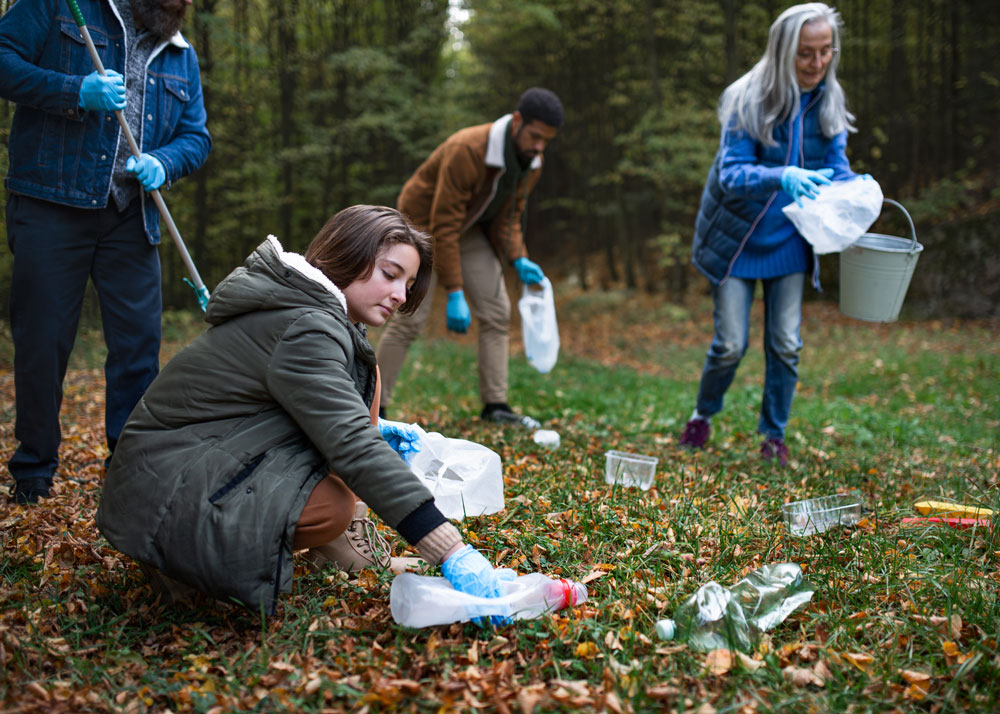
group of volunteers cleaning up forest from waste 2021 12 09 20 13 25 Web

When we do this, loneliness cannot endure. Yes, bad times will continue to cycle in and out of our lives, but each subsequent loss will be met with an ever-growing buffer of self-awareness, support, and love. Each emergence from loss will reinforce our awareness that happiness and contentment will always return.

No lover, no child, no parent or sibling or pet can save us from loneliness. We can only save ourselves. And this is empowering, because it means we do not have to wait. We can begin, in this moment, to craft the life we want and deserve.

So what is holding you back? The time will go by either way. By this time next year, you could be less lonely and more fulfilled than you have ever been. And still that will be only the beginning.

Only a Small Dose, Please

  • Short Summary: We humans are so frail. We need our truths spread out in small doses.

My consulting clients get the unvarnished truth from me. It's not always what they want to hear, but people in positions of power (any position of power) must have someone they can depend on to tell them the truth without fear of consequence. But when they say to me, "I wish you worked for me," I just crack up and tell them: "No, you don't. If I were your employee you would immediately hate the very thing that makes you like me now. Been there, all done with that." We humans are so frail. We need our truths spread out in small doses.

Ouch. That Will Hurt.

  • Short Summary: There are natural consequences for taking more than one gives or expecting more from others than one does from oneself.

There are natural consequences for taking more than one gives or expecting more from others than one does from oneself. We are all capable of abundance and happiness, but these blessings only come from internal motivation, energy, discipline, and personal accountability. Those who wait for (or expect) others to fill in their emotional, financial, or physical needs sadly guarantee that their needs will never be met.

Perfection in the Midst of Pain

  • Short Summary: Even in times of deep worry or emotional pain we can still have moments of beauty and perfection.

Even in times of deep worry or emotional pain we can still have moments of beauty and perfection.

The challenge is to place yourself entirely within the present, to experience only what you can see, touch, hear, taste, or feel at that moment - and pay no attention to the things your mind remembers or predicts. Find something that is beautiful, affirming, or magical to you and immerse yourself in it. Know that the only reality, right now, is the reality of that wondrous thing. The smallest respite from emotional pain can give you strength and peace. To claim those moments for yourself is to give yourself the gift of resilience when you need it most.  

Perspective by the Numbers

  • Short Summary: Don't let someone else's bad behavior reduce your faith in your relationships or humankind. Put it in perspective.

Four people that I trusted and cared about really let me down in the last few months by being greedy, selfish, ungrateful, unkind, gossipy, victimy, a bit crazy, etc. You know how not-fun that is, because it happens to everyone at some point.

But yesterday, I caught myself telling a dear friend that I was having a hard time trusting people. Which is weird, because I'm a trusting person. We're talking Pollyanna status. So I thought about it, and I realized that my perspective may have become inappropriately skewed.

So I gave it some hard thought. How many people hurt me in that way last year? Zero. The year before? Zero again. The year before that? Same story. OK, so the numbers were in my favor. You see, in my experience, people are good - really good. Now, how many people have been good to me, have I had fun working with? How many people regularly and genuinely reinforce my faith in humankind?

I actually did a head-count. Here's what I came up with: 54 family members, 57 friends (not Facebook friends - the other kind), 97 clients, 43 people with whom I sit on boards & committees, 39 people with whom I come in regular contact in my community (it's a small town!), and I tried counting my industry friends that I communicate with daily and enjoy the heck out of, and stopped counting after I topped 350. That is more than 640 people who have NOT let me down - more than 640 people with whom I have regular contact who are fun, generous, creative, thoughtful, hard-working, and increase the joy of my life in large and small ways every day.

It took me about 40 minutes to do this head-count, and it was worth every minute. Now I know that the number of people who actually sent a little hurt my way are less than one half of one percent of the people in my life. I can highly recommend this exercise to you. Spend 40 minutes - heck, spend an hour! - meditating on the people in your life who bring you joy. It doesn't erase the fact that there are a few hurts here and there, but by putting those hurts in perspective, you see them for the boo-boos they really are. 

Oh, and Pollyanna? She's back.

PS: There are people who are suffering, whom the world has let down in harrowing and heart-breaking ways.  My heart goes out to them, because no head-count in the world is going to fix their perspective for them.  But maybe those of us with no real problems to speak of could focus the energy we might otherwise give to our slights and misfortunes on helping in some way. What a terrfic place for that misdirected energy to go.

Pick Your Crazy Wisely

  • Short Summary: Once I understood the concept of "why does it have to have anything to do with you," I became much better at figuring out quickly if a relationship was unhealthy or was simply going through a rough patch.

Both my 29-year-old daughter and my 22-year-old son are in the midst of navigating their most serious relationships to date and I am removing myself from a friendship that wasn't what I thought it was. Of course, we are always in the midst of relationship activity, but this is a lot new and changing activity at once. Which provides a terrific opportunity to reflect on the nature of crazy as it relates to the ones we love.

Each of us brings some level of crazy to a relationship. Of course, to us it doesn't usually feel like crazy. It feels more like our normal, or perhaps we recognize it as our baggage, but we rarely view ourselves as crazy. But from the outside looking in, what feels like the love of a good argument may look like a crazy need for conflict to someone else. My partner loves to contemplate our finances and financial future before we go to bed. I know I react with what might look like a bit of crazy to her, because thinking about money before bed is sure to keep me awake half the night. 

My relationship advice to my children has always been to pick the crazy they can live with, and don't waste time looking for someone with no crazy at all. But that's easier said than done, because a few things happen early in a relationship that get in the way of assessing that. The first is that most people are self-aware enough to hide their crazy, at least for a while. The second is that sometimes what we initially find attractive about a person may have a lot to do with their particular brand of crazy. Even in non-intimate relationships it can take a lot time to determine precisely what the crazy is, because we don't spend as much time with our adult friends as we do with our adult intimates.

So how do you know what crazy you can live with?

Start with a few non-negotiable ground rules. No physical, emotional, or psychic violence. Anyone who would try to hurt you does not possess a brand of crazy you should learn to tolerate. After this, it becomes all kinds of gray, and requires a lot of contemplation, self-awareness, and empathy. In most cases, learning to accept a loved-one or friend's crazy has a lot to do with processing our own crazy.

For example, in my own relationships I have a very difficult time dealing with anger. Not scary, about-to-hurt me anger - just normal human anger. I don't let anything rile me up and I find it objectionable when others don't exercise the same self-control (insert a whole wad of judgmental thinking here). Why? I don't know actually. It might have to do with being a middle child and wanting everyone to get along. It might have to do with never wanting to make my parents angry. Maybe it's just the way I'm wired. What I do know is that it's my baggage.  I have a lifelong friend who didn't get her mother's red hair but she sure inherited her Irish temper. She reacts to the unexpected and undesirable with anger first, and she processes later. She's never dangerous or even scary. She just gets mad. For many years our friendship was on-again, off-again as I reacted to her various bouts of anger. Finally, a mutual friend said to me, "It's her anger. Let her have it. Why does it have to have anything to do with you?" 

Why does it have to have anything to do with you?

And that, I found, was the way to determine if one could live with someone else's crazy. Can that person I love, or that friend that I enjoy, have her crazy without dragging me into it? If she can, then it's all good. In the case of the anger, my friend doesn't require me to become angry with her, she doesn't even require me to listen to her (though now that I no longer freak out, that's much easier for me to do).  Her anger is crazy I can now live with, and as a result our friendship is stronger than ever.

I know a woman who is beautiful, smart, kind, and funnier than David Sedaris and Amy Pohler put together. She also says pretty much whatever pops into her head - without filter - and can be scandalous at times. I absolutely love being out with her because she's so much fun. At one time she was engaged to a man who was clearly excited to have such a beautiful woman on his arm, but he was incapable of accepting her just as she was. He was constantly shushing her in public and arguing with her after social events about what she had said.  His need to be perceived in a certain way, to carefully monitor how everyone in his world viewed him, didn't allow for a fiance that was unconcerned about what people think. This was crazy that she could not live with. It was crazy that did violence to her sense of self, because it dragged her into it by requiring that she behave in a way that was not her.  Of course, her crazy probably had the same effect on him - because it dragged him into a social spotlight that he could not tolerate. Now, several years later, she is engaged to another man who completely digs her and every funny thing she says. 

I have another friend who is deeply insecure, and I know that on a regular basis she struggles with comparing her accomplishments to those of everyone else around her, including me. But she doesn't require me to go down that path with her. She never needs me to be hateful and she doesn't expect me to change who I am or what I do. She appreciates it when I listen, but doesn't abuse it either. When on occasion I experience a success that triggers all her self-doubt and self-criticism, she may struggle for a while to let me know how happy she is for me, but she keeps that struggle to herself, because she is happy for me - she's just mad at herself. I know some people find that dealing with deeply insecure people is crazy they can't handle. In this case, my friend is dear to me and hers is a crazy I can live with. But I mentioned earlier in this article a friend from whom I have withdrawn. She and her husband are also deeply insecure. Their brand of insecurity leads them to suspect that everyone is trying to steal something from them, trying to get one over on them, or will somehow reduce them. Their insecurity is about living in a zero-sum world. When they turned that insecurity on me, they became abusive and even litigious. After trying to help them calm their fears, I realized that theirs was crazy I could not live with. In the first example, my friend does not make me participate in her crazy or diminish me in any way by it. In the second example, I became the target of their crazy.

Once I understood the concept of why does it have to have anything to do with you, I became much better at figuring out quickly if a relationship was unhealthy or was simply going through a rough patch.

Sometimes there's a time-limit on crazy

The most obvious example of putting a time-limit on crazy is teenagers. As parents of teenagers, we recognize that their brains are going through rapid transformation, awash in hormones, and they are impulsive and moody and always tired. And then they grow out of it (well, most of them do). It's part of parenting, this craziness that we accept out of love for the people they are becoming and our role in helping them get there. Other examples of extended tolerance for crazy is when a loved-one has experienced a significant loss, of a parent, or a mate, or a child. Whether that loss is through separation or death, the grieving period takes time - in some cases years, not months - and out of empathy we hang in there with their grieving form of crazy.  

How do you know if you are hanging in long enough, or if you have been waiting too long? Start by reflecting that any relationship worth having is worth having for decades. When my life partner Mar lost her parents - both within four days of each other - her grieving was intense and lasted for at least 14 months. Of course it affected everything from intimacy to social fun, but we are both very clear that we are in this relationship for however long forever can be, so a year or several in that context was not too much to give. All the time she was working on her grief - not just running from it - so I knew she would ultimately get better, and she did.

There does have to be balance over time. But good relationships are found in the balance over time, not just on a day-to-day basis or even week-to-week.

Keep it in perspective

We all want our happily-ever-after, but somewhere along the line that became synonymous with easy.  It's tempting, when a relationship fails to be easy, to think that it is therefore bad. If we want to be in fulfilling relationships that deepen over time, we have to be prepared to deal with a bit of crazy from others, and recognize that we are bringing some crazy to the party ourselves. While I, too, have loved the early stages of intimate relationships with all their heat and excitement, I know that one has to choose. If you want to experience the joy that comes from 50 or more years of deeply knowing someone and letting them know you, you have to reject the excitement of the starting-overs. And you have to learn to pick your crazy wisely.

Platitudes 1:1

  • Short Summary: There are so many truisms we accept without evaluation and many of these lessons were important teachings on the path to becoming an ethical adult. But not all of them.

There are so many truisms we accept without evaluation. Things our parents taught us, things the minister said, things that were drilled into our heads at Sunday school, over dinner, or in the classroom. Many of these lessons were important teachings on the path to becoming an ethical adult. But not all of them. Some were based on pop (read – unproven) psychology, fear, and the need for social conformance over authentic living.

I encountered one of these banalities yesterday. A woman, at one time my friend, possesses keen intelligence and creativity, and is capable of friendship and tender-heartedness. But like the little girl with the little curl in the middle of her forehead, this woman is also capable of hateful behavior, manipulation, and attack. It has been clear for years, both when she was my friend and afterward -- when the disappointments and risks of being her friend became too great -- that her problem was one of self-loathing. Yesterday, when encountering her for the first time in a great while, a powerful truism demanded its day in court. 

Some time in the 1970s pop culture began teaching us that we cannot love others until we love ourselves. One of the largest industries in the world – the self-help publishing and media industry – has been built almost entirely on this premise. The commandments of this movement are clear. Thou shalt learn to love the way you look. Thou shalt learn to love the way you act. Thou shalt learn to love the clothing you pick. Thou shalt learn to love your lovableness. 

One commandment that is missing from that lot is thou shalt learn to love the way you think. The love-yourself-first movement includes thou shalt learn to think loving thoughts about yourself, but not thou shalt learn to love the way you think

Popular culture got it wrong. If we spend our lives trying to learn to love ourselves first, we may never end up loving – categorically loving – anyone. Real loving is the commitment to contribute to another person's spiritual growth. Did I say religious? I almost never say religious, unless I'm dissecting it. I said spiritual. Commitment to contributing to another person's earnest seeking to live a life in right relationship to others is love. Commitment to contributing to another person's ethical or moral state, their state of values and beliefs as opposed to external action (though one certainly follows from the other), is love. Will learning to love ourselves first assist us in achieving the love of others? 

No. In fact, the opposite is true. Only when we learn to extend ourselves to others by loving them can we learn to love ourselves. We can achieve an understanding of our own worthiness only when we consistently see the worthiness of others. Each time we deny the worthiness of another human being – which is tantamount to refusing to love them – we deny the worthiness in ourselves. Perhaps we don't recognize it as such, but there is knowledge, deep within each of us, that understands that no one person is more or less worthy of love than another. That which we deny another human is something that must be denied in ourselves. At the end of the day, only our wholeness matters. 

For a long time I had felt hard-hearted toward my one-time friend. She abused my friendship and trust. She hurt me. But in a moment of insight, such a simple gift of awareness, I realized that she was locked in a prison of her own making. I ached for her. And in reaching out to her with love instead of a hard heart, I felt better than I had for a long time. 

We can only love ourselves when we reach out in love to others.

Poor You. The World Didn't Cater to You. Again.

  • Short Summary: Just because you believe something to be true doesn't make it true even if others believe it with you. Personal beliefs are just that. Personal.

I didn't watch the Super Bowl yesterday. It's just not my thing. Normally it would have been on at my house, because my wife is a rabid football fan, but we respected Super Bowl Silence this year since she's still bruised over the Packers.

I was peripherally aware that Katy Perry was doing the Half Time show. She's a talented young lady (though not an artist I follow much), so I assumed it would be entertaining. Yet, when I looked at my Facebook feed at the end of the day, all I saw was Katy Perry bashing. A lot of it. People - adults - complaining that she's not talented, she's an offense to music, she’s worse than every other available singer, and that the NFL was stupid for hiring her. How tiresome.

 My wife is really into The Beatles (still). I like exactly four of their songs. I recognize a certain genius in the whole Beatles phenomenon, but frankly, they're not to my taste. My 13-year-old grand-daughter is into metal bands. I have tried to listen with her but I don't get the appeal (though I do get a headache). My son and daughter and I have very similar music tastes. Except when it comes to opera. I listen to that alone.

We are all entitled to our own tastes, but why do people feel compelled to talk about how 'awful' an artist is just because the artist is not their cup of tea? Isn't it equally possible that the complainer's taste is deficient?

We do this with all sorts of preferences.

I can't eat (or I read an article about) gluten, so nobody should eat gluten.

I only speak English, so everyone should be English-speaking.

I only shop on 5th Avenue (or the Gold Coast, or Beverly Hills) and anyone who doesn’t shop in those places is déclassé.

I only shop at Walmart, and I believe anyone who spends more than that on clothing is a liberal elitist.

I believe abortion is a right, so anyone who disagrees with me hates women.

I am grossed out at the idea of having sex with someone of the same (or opposite) gender, so everyone should be grossed out with me.

I believe my religion is the chosen one, so anyone who follows a different religion won't be saved.

I don't believe in a god, so anyone who does believe is a fool.

The only thing our preferences and beliefs say anything about is ourselves. Just because we believe something doesn't make it true, even if others believe it with us. Our tastes are not an accurate reflection of anyone else's talent or worth. Our unique perspectives are interesting and make the world rich with diversity, but when we cross the bridge to thinking our beliefs actually define reality for others, we are delusional at best, dangerous at worst.

That doesn't mean we all have to agree. As a gay woman, I've heard many many times that my lifestyle is disgusting. On the other hand, just last week my grown daughter - mad at her boyfriend - said to me "It would be so much easier to live forever with another woman, but women just don't do it for me." In the first example, the judgers attempt to make me responsible for their feelings of disgust. In the second example, my daughter owned her preferences. We each must own our beliefs and preferences - and let others do the same.

So, all you Katy Perry (immigrant, gay, pick-a-religion, atheist, black, welfare) bashers out there. Own your own shit. Once you do, you'll realize that your post on Facebook last night had zero bearing on whether or not Katy Perry is talented. It was just a bunch of whining that you had to be exposed to something that wasn't your personal preference. Poor you.

Prioritizing My Life

  • Short Summary: Have you ever told someone you didn't have time to go to dinner with them or didn't have time to stop and play in the yard? It probably didn't feel like you were lying but it was a lie. In fact every time I have said to my children “I don't have time to run you to the mall right now ” what I have really been saying is “running you to the mall isn't as important as something else I am doing.”

I changed a car battery for the first time today. For me this was a cause for celebration, though you may be wondering why a 43-year-old woman has never changed a car battery before. I can’t get the alternator tested before tomorrow, because I don’t have a voltmeter, but if the alternator is bad I’ve already looked up how to replace it and I think I’ll take a stab at that.

What is this, a sudden hankering for a career as a mechanic if I ever find the management consulting fees running thin? Not really – I hate getting my hands dirty and I’ve noticed that working on the car tears up your clothes. It’s actually an important lesson in prioritization, and a reflection on the nature of time.

Have you ever told someone you didn’t have time to go to dinner with them, or didn’t have time to stop and play in the yard? It probably didn’t feel like you were lying, but it was a lie. In fact, every time I have said to my children “I don’t have time to run you to the mall right now,” what I have really been saying is “running you to the mall isn’t as important as something else I am doing.”

Do I feel bad about that? Not necessarily, but sometimes. There’s nothing wrong with letting people know that you have priorities, but to do that you have to know what they are first! Many times in the past I have been unclear with others regarding what I would or would not do, because I understood at some level that my priorities were whacked but I couldn’t get myself back on track.

Life is all about prioritization. For instance, I’m actually quite good at mechanical things. Hot water heaters, swamp coolers, assembling furniture – these tasks have always been mine, and I enjoy them. Well, I enjoy them when I have time for them, which I almost never had. Oh, wait, I DID have time. I just wasn’t making those things a priority, and when I did carve out the time to do them, I did them somewhat resentfully because doing them prevented me from finishing a proposal or catching up on email, or I knew that I was getting further behind in something and that I wouldn’t like the consequences.

How will I prioritize my life and work going forward? I would like to think I have learned some important lessons in this regard. I genuinely like working (and have been known to hide behind work), but I also had a lot of fun changing that battery today! There are things we miss out on in life if we don’t identify that they are important to us. Simply recognizing they are important is a first step. Identifying how much time each deserves is the second.

It’s great to know I have as much time as I need! (it’s taken me until my 40s to learn that too). It just isn’t as much time as I want, or as much time as I could use. But it’s enough. And it’s all good.

Probably Not a Good Idea

  • Short Summary: Probably Not a Good Idea

I'm thinking that picking "Closer to Fine" for a funeral song would probably put some people off. I'll just sit around and sing it for a few hours instead.

Put the Kids in Charge

  • Short Summary: Put the Kids in Charge

I just took four days to experience R&R at the discretion of an 8-yr-old. To guide, not control; offer suggestions, then go with the flow (oh, and drive). It was all about parks, pools, zoos, snacking not dining, loooong walks, holding hands, staying up late & watching movies while eating candy in bed, & non-stop talking. If being truly present is so rewarding, why is it so rare? I am claiming more of it. With my whole family.

Reflection on Influence and Character

  • Short Summary: Is buffering our children from social influences wrong? How is a liberal social thinker similar to a religious fundamentalist in regard to home schooling?

I have long been critical of religious fundamentalists who homeschool to buffer their children from the influences of popular culture. It seemed like an indictment of the rest of us, and I had a rather emotional - even visceral - reaction to it.

I also sincerely doubted the value of the education those children were receiving. Creationism? Bigotry backed by uninformed theology? Were their parents educated enough to actually produce a new generation of intellectually engaged and informed citizens? I had given a lot of thought to this.

I'm not anti-religious. I am personally a product of a truly fine Catholic education - an education that I credit with helping me become the strong critical thinker and social participant that I am today. The combination of my Catholic education and my Jewish background have given me a rich platform from which to live my life. Now I know that my criticism is more about their belief systems and not of their desire to buffer their children.

I come to this conclusion based on new insights as I provide learning assistance and coaching to my grand-daughter. No, I am not her teacher - as well-educated as I am, I do not consider myself sufficient to develop a strong curriculum. We rely on K12 International Academy for that, and they are well worth the money. But the act of being with her each day, of discussing her lessons with her and observing her learning process, has created in me a strong awareness of how much of her social experience we are buffering her from - and how excited I am about that.

She's not exposed to the bullying - of herself or of others. She's not hearing people use racial, religious, sexual identity, or cultural slurs, or words that speak meanly of people due to their weight, social class, intellectual abilities, or family situations. When we discuss history, we have rich discussions about not only what our country has done right, but also what we've done wrong and how we have to work as citizens to correct those things. When we discuss literature we can delve into the human condition and explore issues of motivation, ambition, mental health, sexuality, and all of the characteristics that make people so complex, interesting, and memorable. We can learn real science and still hold a place for the wonder of spirituality. I want my grand-daughter to be exposed to the richness and diversity of humanity, and I am highly desirous of her exploring the ambiguity and subjectivity of life in general. I don't want her to grow up on rules - I want her to grow up with principles and character.

This makes me exactly the same as the fundamentalist home-schoolers in terms of motivation if not in terms of belief systems. We didn't come to this educational approach because of the desire to buffer - rather, my grand-daughter wants to skip ahead a few years and this was the most effective way to do so. But now that I've arrived at this conclusion, I'm not sure I could let it go easily.

Of course, she will have to learn to deal with social conflict, racial bias and bigotry of all sorts, cruelty, and situations with a rock on one side and a hard place on the other. But at the tender age of 11, I am excited about the opportunity to help her explore these concepts through history books, literature and science, and not first-hand. I am hopeful that this opportunity to conceptually grapple with these ideas will arm her with the conscience - and consciousness - to respond with grace and strength to inequity, ignorance, cruelty, and small-mindedness when she experiences them in the real world.

Yes, I have joined the ranks of people who wish to buffer our children from the world. Now I have to grapple with whether or not that is the best thing for us to do.

Reflections on the Day after Thanksgiving

  • Short Summary: Reflections on the Day after Thanksgiving
  1. The taste of the meal has a direct correlation to the quality of the company (our meal was 5-Star).
  2. Banana Cream Pie for breakfast should be a regular thing.
  3. Perfectly carving a turkey is over-rated. It just looks like carnage five minutes later anyway.
  4. Watching my daughter and grandchildren have fun makes me happy in ways I cannot express.
  5. There are few things as wonderful as hearing belly-laughter over three different things in three different rooms.
  6. Apparently, fresh-made cranberry sauce is only meant for leftovers, because this is the 2nd year in a row I’ve forgotten to put it out with the meal until the meal was nearly over.
  7. Family has little to do with blood and everything to do with commitment. These people are my people.
  8. Those pictures of elegantly set dining rooms on Instagram are sort of like thumbing through National Geographic. Interesting to see how other cultures live, but not something you can even relate to when 1/3 of your guests are under the age of three.
  9. Who the hell wants to wash that much china anyway?
  10. I can be delighted that my son is off having the adventures a 24-year-old is supposed to be off having and still wish he was here with us instead.
  11. If an adult spit chewed food in your hand, you’d need to see a therapist. But when it comes from a 19-month-old it’s no big thing . . . even if the 19-month-old isn’t your own.
  12. If you want to give a (social) dog the equivalent of a hangover, surround him with at least 30 people who are willing to pet him all day.
  13. We all possess one infinite resource, and that is love. There is no limit to how much love we can give nor how many people we can share it with.
  14. Good families get along nicely at Thanksgiving. Great families look for excuses to get together for a big meal many times throughout the year.
  15. There is nothing more calming to a young parent than hanging out with other young parents and seeing how their children behave. Yes, your children are all normal.
  16. Thanksgiving isn’t a space out of time. People show up with their lives-in-process. They bring excitement and an appetite, and they also come with recent loss, current challenges, and any number of preoccupations. The best gatherings take us in exactly how we are, and over the course of the day buff out the cracks and soften the edges.
  17. You’re not supposed to drink the shot. You’re supposed to toss the shot, then taste the after-glow.
  18. If you want an extended family to thrive beyond its first two generations, give the children the example of adults who love, enjoy, and accommodate one another.
  19. Rubber gloves can be a subject of much mirth.
  20. After 20 years my wife can still surprise me, still makes me laugh, and is my favorite person to hang out with alone or in a crowd.
  21. You know the children are having fun when adults start whipping out their cell phones to check their decibel-level apps.
  22. Intellectually I accept that my nieces and nephews (blood, married-in, stepped-in, doesn’t matter) have many families to please on Thanksgiving. Emotionally, selfishly, I want them all here with us. I feel their absence.
  23. That moment when you look around and see the people you love most in the world having a great time; laughing, listening to one another, holding each other’s children and grandchildren.

Remember This

  • Short Summary: I want to remember this moment forever.

Tonight she is in a cornflower blue t-shirt, hot pink shorts and snow boots, riding around the field on her baby-blue bicycle with a ribbon blowing behind her, trying to outrun the dogs. I want to fix her in my memory this way forever.

Stop Running from Your Dreams

  • Short Summary: Whatever it is that you want in life just put it out there. Sooner than you think it happens. The challenge isn't to get it -- it's to stop running from it.

Whatever it is that you want in life, just put it out there. Sooner than you think, it happens. The challenge isn't to get it -- it's to stop running from it.

Stop. Write.

  • Short Summary: Write down your objectives solutions or ideas.

Hurtling through the day without time to think? Stop. Write down your objectives, solutions, or ideas. Clear writing forces clear thinking.

Subterfuge

  • Long Summary: A poem by Andrea Hill about how loss sometimes creeps up on you.
  • Short Summary: A poem by Andrea Hill about how loss sometimes creeps up on you.

Nobody loses herself all
at once.
It's stealthy.
It spreads itself out to
blend in. Slip by.
You don't realize
you should be mourning.
You go on.
You do,
while pain puddles in shadows.
It's life.
It waits.
Late nights it's a moth. Or imagined?
Batted away, it talks to your dreams.
Daylight scatters it,
until it doesn't.
It begins to wake with you
Wake you
Walk with you
You should have been mourning,
but you missed it.
Until the pieces were gone,
And you can't understand how you didn't know.

andrea hill

Taking Back Time

  • Short Summary: I sat down and made a list of all the things I have thought about doing and learning but which I had never had time for. And suddenly I was out of time again but in a wonderful way a way that motivated me to remove all the things that don't need to be done.

My daughter has two children and is pregnant with her third. She’s also works full time as a nurse, and she just returned to school to become a Nurse Practitioner. She’s really busy. I go to her house on Wednesday and Friday mornings to take care of the kids, and while I’m there I’ll do things that need doing. A load of laundry. A sink full of dishes. Whatever I find.

This drives my daughter crazy. She appreciates it, but she feels like I shouldn’t be cleaning her house. She says, “You do too much already.” Then she says the thing that really matters – as if I needed her to explain herself: “I don’t have time to do it all, so I let the things sit that can wait, and I don’t do the things that don’t need to be done. I’m OK with that.”

I’m OK with that too. It’s the best possible way to manage a busy life.

That was always my rule when my own children were small. I preferred to hang out in the bathroom for long, playful pre-bedtime bubble baths than to get my kitchen in spotless order (plus, there was always the slim possibility that the dish fairy would visit, though I didn’t actually meet and marry her until about 10 years later).

When my daughter said this, I realized that I hadn’t been applying that rule well enough in my more recent life. It seems entirely possible that in the years since my kids had grown up and moved out, since I left corporate life to start my own business, since the juggling act I had perfected in my younger adulthood was no longer necessary, it seems possible that I had become lazy about prioritizing. Yet my time is no less valuable now. So I started on a mission to refocus on letting the things that could wait, wait, and not doing the things that needn’t be done.

It’s easy to figure out the low-value things one is doing with one’s life, but it takes some thought to decide what one could be doing instead. I had already added two hours of sleep daily (I had no idea how wonderful eight hours of sleep could be!) since my children left adolescence behind them. I didn't need more sleep. Sure, I still work a full-time job, but with two adults in a house that rarely becomes messy, my non-work hours are my own. But what did I need? What did I want to learn, do, or be that I haven’t given myself time to achieve?

This was a fantastic exercise, something I wish I had thought of much sooner. I sat down and made a list of all the things I have thought about doing and learning but which I had never had time for. And suddenly, I was out of time again, but in a wonderful way, a way that motivated me to remove all the things that don’t need to be done.

Here are some of the things that were wasting my precious time, both in my personal and professional life:

  1. Email. I unsubscribed from nearly every email list.
  2. Social media. I can get its full value in 20 minutes each day (or less).
  3. Unnecessary groups and social commitments. I can still remember the explosion of relief I felt when I realized I had just attended my last PTA meeting. For some people, social commitments bring them the very quality they want in their lives. Me? Not so much.
  4. Shopping! Grocery, clothing, household, online and in real life, shopping was taking up too much time. We figured out how to cut that time down to almost nothing, and decided to make the time we do spend shopping fun, together time.
  5. Exhausting, time-consuming clients. I can make more money in less time with clients who are clear about what they need and are easy and professional to work with. Now I select my clients with the same care I select my employees.
  6. Meetings. I run a company that has one meeting per month. Total. Not one meeting per department per month. Not one meeting per client group per month. Just one meeting. Per month. Everything else is done over an internal social media style network that is fast, easy, and effective. The one meeting per month is done in an hour or less.
  7. Trade events. I belong to an industry that has a lot of trade events. I long subscribed to the idea that I needed to be seen, to be front-and-center, to remain competitive. But in the past two years I’ve tested that notion and found it dead wrong. Now I only travel when I must to meet a customer commitment or when there’s a presentation or educational experience that fits my personal goals.

Your list of things that take away your precious time could include online games, frequent eating in restaurants, long commutes, compulsive cleaning, perfectionism, conspiracy theory obsessions, insisting on doing everything yourself, packing your lunch every day, washing salad greens instead of buying pre-wash, or having extra-marital affairs. Whatever they are, figure them out, and stop doing them.

These days I am spending much more time on one of my favorite hobbies (knitting), I watch my grandkids, I read a lot, and I am learning a new computer code language (Ruby). I feel busier again, but less tired. I always have something to look forward to. All this, just for taking a bit of time to reconsider how I spend my time.

And every time I fold a load of my daughter’s laundry, or do a load of dishes, or whatever I find at her house that needs to be done, I remember with gratitude that she brought this lesson back to me at a time when I really needed it.

Taxicab Balladeer

  • Short Summary: Everywhere you go people can surprise you. They are rarely just what they seem.

I get in my cab tonight after dinner, and the cab driver says "I'm the best cab driver you have ever had." I tell him, "That's going to be tough to achieve. Everywhere I go I meet wonderful cab drivers - it's one of my favorite things about traveling."

So he says, "Well, I bet you never had a cab driver serenade you before." He's right. This has not happened. "What will you sing for me?" I ask. "One of my favorite songs," he says. "A love song in my native language."

"Are you a tenor or a baritone?" I ask. "Both," he says. "When I was a young boy in Mexico City, I could do every voice in the choir." "OK," I say, "Sing me your song. It's been a terrific day and this sounds like a wonderful way to end it."

And he begins to sing. A soft, melodic, then soaring Spanish love ballad. I put my head back, closed my eyes, listened, then wept. When he opened my door I kissed him on his cheek and gave him his due. "Yes," I said, "You are the best cab driver I have ever had."

Everywhere you go, people can surprise you. They are rarely just what they seem.

The Lonely Fight

  • Short Summary: At the end of the day we all have to fight our demons alone.

At the end of the day, we all have to fight our demons alone. And I think that's the source of loneliness. If you spend your whole life insisting there are no demons to fight or hiding your demons or determined to fight them in private, you end up existentially alone.

The Non-Reflective Life

  • Long Summary: Sometimes I envy the non-reflective. For them, life just is. They just are. It seems peaceful and ... simple. Unlike the wear of evaluating and reevaluating that expands with time and age and accompanies one to bed at night and wakes one up in the morning.
  • Short Summary: Sometimes I envy the non-reflective. For them life just is. They just are. It seems peaceful and ... simple. Unlike the wear of evaluating and reevaluating that expands with time and age and accompanies one to bed at night and wakes one up in the morning.

Sometimes I envy the non-reflective. For them, life just is. They just are. It seems peaceful and... simple. Unlike the wear of evaluating and reevaluating that expands with time and age and accompanies one to bed at night and wakes one up in the morning.

The Real Goal of Work

  • Short Summary: The ultimate goal of work is to take our major theories about life our strong desires and our talents and combine them in such a way that we can support ourselves while living meaningfully.

I think that the superficial goal of work is to make money. The ultimate goal of work is to take our major theories about life, our strong desires, and our talents, and combine them in such a way that we can support ourselves while living meaningfully. Like love, success and happiness are not experiences or emotions - they are choices.

To Be Present, Read Each Moment Like a Book

  • Short Summary: I have become better and better at reading each moment like I read a really good novel - lost in the story and wanting it to last forever. I'm a fast reader but I purposely slow my reading speed as I reach the end of each book just to prolong the experience of it.

For me, at least, the ability to be in-the-moment, present, did not come easily. Just this morning, as I snuggled my 14-month-old grandson before laying him down to nap in his Pack-n-Play next to my desk, I gazed into his beautiful trusting eyes and thought about when it had happened, and how.

It certainly didn’t happen when my children were young. It’s easy for me to think that this was because I was constantly feeling the pressure of caring for young children alone while stressing over money. In retrospect, I can see that even the big pressures of life weren’t responsible for my lack of presence.

It didn’t happen when my children were teenagers and I had achieved a level of financial security that allowed me to focus on things other than paychecks. It didn’t even happen when my kids were heading off on their own and my responsibilities were declining for the first time since I was a teenager.

But I know exactly when it happened, this new ability of mine. It happened in a flash. During a time of genuine sadness and loss, I realized I was completely absorbed in the antics of a chipmunk outside my window. He was gathering seeds, but he kept getting distracted and rolling around in the grass instead. I found myself laughing, and I realized that in that moment I felt pure happiness and lightness of heart, even in the midst of my pain.

It struck me then that each moment is its own reality, a fully contained experience. It gave me such hope to realize that I could feel so happy and optimistic, and that these feelings could live alongside my feelings of sadness; that each of those opposite feelings could be completely real and true.

Since that time, I have become better and better at reading each moment like I read a really good novel – lost in the story and wanting it to last forever. I’m a fast reader, but I purposely slow my reading speed as I reach the end of each book, just to prolong the experience of it.

I do wish I had held on to more of the moments of my life with this passion. But I do it now. Laughing with my granddaughter in the car, drinking coffee with my daughter in the morning when she drops off the kids for the day, Skyping with my son, sitting around the kitchen table with my kids and nieces and nephews and just taking in their wonderful energy, sitting on the patio in the quiet evenings with my wife. I don’t know how many years I have left of life, but I do know this. By reading each moment like a good novel, by purposely slowing my reading speed to savor the moment while it’s here, I can make each moment last a bit longer. I have a feeling the last decades of my life will last twice as long as the first decades as a result. 

Tweet This

  • Short Summary: I love hearing the birds Twittering outside my window. They never restrict themselves to 140 characters.

I love hearing the birds Twittering outside my window. They never restrict themselves to 140 characters.

We Could Just Try This

  • Short Summary: I suspect that if everyone comprehended the true natures of opinion and belief versus fact and ethics there would be more constructive debate and less mindless conflict.

I suspect that if everyone comprehended the true natures of opinion and belief versus fact and ethics, there would be more constructive debate and less mindless conflict.

What Can You Do Today? OODA Loops!

  • Short Summary: Today Andrea shares the concept of OODA Loops and gives some practical advice for how you can spend meaningful time working ON your business.

[00:00:00.360]
If there's a recession, we know what worked and didn't work in the last recession, we don't necessarily like the fact that things take a certain amount of time to get through or that they cost a certain amount of money to get through. But there's a precedent and this time we don't have a precedent. And so I think all of us wake up every morning with a certain amount of anxiety. We wake up, we remember we're still in this moment and then we think, I don't know what to do and that not knowing what to do and not being able to imagine what comes next really shakes us up because we're used to knowing what to do and what comes next.

[00:00:39.610]
I guess the first thing to remember is that it's OK not to know what comes next.

[00:00:47.010]
It's not comfortable, but we are all in this together. No political leader, no business leader. Nobody actually has the answer of what to do next. And that may sound terrifying to you, but the reality is we are a very creative species and answers will start emerging and we just need to stay tuned and pay attention. So what do you do today with that, though? You know, what do you do today when you're worried about what comes next?

[00:01:19.680]
Well, there are a couple of leadership skills that I think every one of us can apply in our daily business. The first one I just said, I was reminded by some of my business school heroes. They reminded me of something called the OODAloop, which I hadn't thought about in forever. And yet it is the perfect tool for today. So it comes from a I believe, a Navy fighter pilot, definitely a military fighter pilot. May have been Air Force, but OODA stands for Observe, Orient, Decide, Act.

[00:01:53.100]
And fighter pilots are dealing with rapidly changing situations that are life and death. And so they have to go through and it's called a loop for a reason.

[00:02:03.510]
You have to observe, Orient, Decide, Act, observe, Orient, decide, act very quickly as the conditions change. And the idea is, if you are doing your ouda loop, your Observe, Orient, Decide Act sequence faster than the conditions are changing, then you're in control of the situation. If you're doing them slower than the conditions are changing, then the situation is controlling you. So every day we can wake up and we can observe.

[00:02:31.680]
And what's happening now, we can orient ourselves to the current condition.

[00:02:36.240]
We can decide what we can do within the current conditions and then we can act on that. Sometimes conditions are changing faster than that. Sometimes we need to do it twice a day.

[00:02:48.120]
Now, I've been observing the situation since it emerged in China. I was out of the country when the flu started. I started keeping spreadsheets almost immediately. My spreadsheet goes back to January the 24th and I've been managing a company in Italy throughout this whole transition. So I can tell you from my experience, I have never seen the conditions change more than twice in a day. It's not three times a day. It's not six times a day. It's once or twice a day that we've seen dramatic condition changes.

[00:03:18.570]
So, hey, look at it this way.

[00:03:20.070]
We're not fighter pilots. We don't have to do the loop every 30 seconds or die. We just need to reorient and consider once or twice a day and then we can decide what to do today. So what can you do today? Because that's what's going to give you comfort. That's what's going to give you a feeling of control. Well, a lot of you have been referring to the fact that you're learning things that you need to learn for your business.

[00:03:42.420]
That is a tremendous thing that you can do today, is invest in your own learning.

[00:03:47.820]
But the other thing that all of us can be doing should be doing is this process of imagining the scenarios that will evolve and how we might respond to them.

[00:04:01.380]
So typically in business, we say, what are the possible things that could happen? And they're kind of a known list. And then how can I respond to each of those things if they do happen in this situation?

[00:04:15.000]
It's a much bigger list.

[00:04:16.710]
We don't actually know all the things that can happen, but we can each go through the process of imagining different types of outcomes.

[00:04:26.430]
So if you sat down today and imagined for your business four or five different possible outcomes, maybe they're simple, like, what if I can open up in four weeks? What if I can open up in eight weeks? What if I can open up in twelve weeks? And then you think, OK, what will the world look like? Four weeks, eight weeks, twelve weeks from now?

[00:04:48.780]
So you kind of put together these scenarios, these imaginary.

[00:04:55.610]
It's scenarios like draw a picture of what you think the conditions will look like and then say, OK, in scenario A.

[00:05:03.350]
These would be my challenges and these would be the things I could do to meet the challenges in scenario B, these would be a different set of challenges.

[00:05:12.050]
I mean, if we shut down for 12 weeks, it's going to have less economic ramifications than if we're shut down for 16 or 20 weeks. Right. So each scenario has different conditions and we can imagine those conditions just make them up, put some bullet points on paper.

[00:05:28.640]
The other condition that could be changing is that you may have different available skills in your business by then that learning that you're doing.

[00:05:38.150]
Melissa quick posted yesterday that she's working on her CRM right now. And I'm like, yay, Melissa, that's a great plan.

[00:05:45.260]
The things that you're learning will also change your conditions eight weeks or 12 weeks or 16 weeks from now.

[00:05:51.890]
So imagine and don't try to imagine 700 scenarios. That's overwhelming. Try to imagine several different scenarios and then imagine how you might respond to those. That kind of creative thinking and problem solving is what we do as business leaders every day. And it's something that everyone is capable of doing. And it starts building this library of ideas that you will need to get through this thing. So that is a very active thing that you can take control of and start doing for your business.

[00:06:27.390]
So remember that it's OK not to have all the answers right now. You're not missing the ball because somebody else knows what to do. And you don't do surround yourself with experts. Do make sure you are listening to the most qualified information you can have.

[00:06:46.070]
Again, none of us have the answers to this because we haven't been through a global pandemic in the modern technology and business environment.

[00:06:53.930]
So nobody can tell you they have the answers, but do the work of surrounding yourself with information that comes from qualified people who can bring pieces of their knowledge to your thought process and make you smarter.

[00:07:08.930]
That's really important. Assemble the right team in a business. We assemble the right team by pulling together the experts that we need for that internal team. As an entrepreneur or a small business, you need to assemble those elements from your external advisors and maybe they're a direct adviser that can sit down at the table and talk with you. Maybe they're just a thinker or a knowledge person that is publishing or talking on webinars.

[00:07:33.770]
But do do police the quality of the information you take in and then focus on your learning and focus on these scenarios and readdress your scenarios every single day. I told you I started keeping a spreadsheet in late January. Well, I have revisited that spreadsheet once a day and I've got another tab that has all my different scenarios about how things may play out. It's not about forecasting it accurately. Nobody has forecast this thing accurately some days and close in some ways.

[00:08:07.370]
I'm off. It's not about the accuracy, it's about the thinking. So as I have done this work of revisiting my scenarios over and over and over the last few months, I add new thoughts to the process. New ideas, new insights, new ideas. And all of that is going to help me be more prepared as this thing rolls on. You can do that, too. So that's my thought for you today.

[00:08:33.170]
Get on those processes and information will keep evolving and we'll get smarter together.

[00:08:41.330]
Oh, if you haven't signed up for in stores webinar today, we're going to be talking about a lot of the things we do know and can plan for. And also that the webinar series that I do with my essay, we're going to publish a brand new schedule of really frequent webinars over the next few weeks to keep addressing these things. So look at those two resources as well, because we're going to try and keep you informed as much as we possibly can with the best information we can come up with.

[00:09:09.080]
So have a great day to talk to you later.